NEWS ARTICLE
3. Bitcoin vs Ethereum vs Solana: Understanding the Differences SEO Keywords: Bitcoin vs Ethereum, Ethereum vs Solana, cryptocurrency comparison Compare the three major blockchain ecosystems, their technologies, practical applications, strengths and limitations. Recommended length: 2,000 words.
Explore the key differences between Bitcoin, Ethereum, and Solana, including their technologies and applications.
By Laurie Suarez · October 11, 2026
Introduction to Blockchain Ecosystems
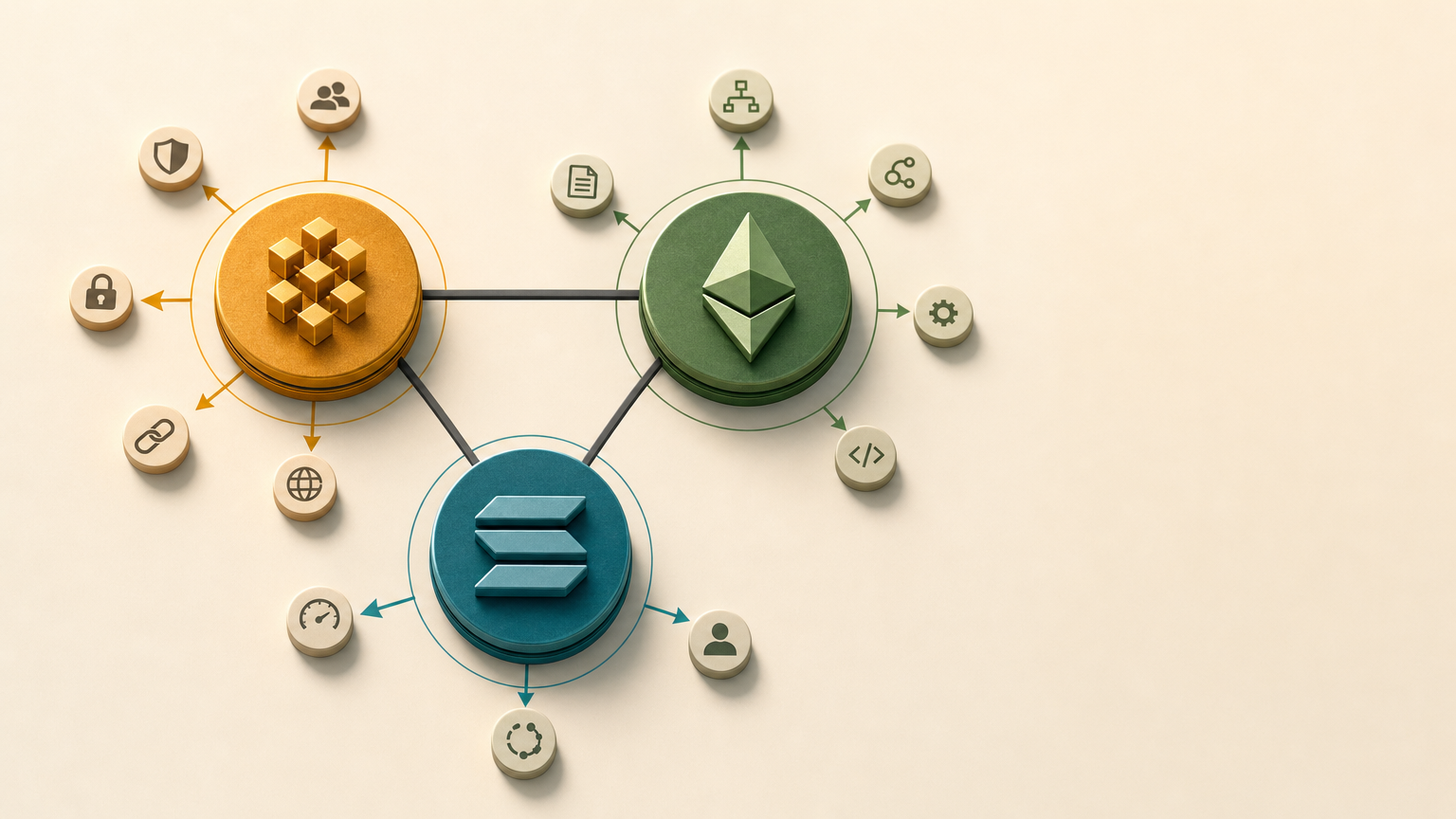
In the rapidly evolving world of cryptocurrency, three major blockchain ecosystems have emerged as frontrunners: Bitcoin, Ethereum, and Solana. Each of these platforms has its unique features, applications, and technological underpinnings. Understanding these differences is essential for anyone interested in the cryptocurrency market, whether they are investors, developers, or simply curious individuals.
Bitcoin, created in 2009, is primarily recognized as a digital currency. It was the first cryptocurrency and remains the most widely known and used. Ethereum, launched in 2015, introduced the concept of smart contracts, which enable decentralized applications (dApps) to run on its platform. Solana, a newer player in the space, focuses on high-speed transactions and scalability, making it a popular choice for decentralized finance (DeFi) projects.
This article will provide a comprehensive comparison of these three blockchain ecosystems, examining their underlying technologies, practical applications, strengths, and limitations.
Overview of Bitcoin
What is Bitcoin?
Bitcoin is a decentralized digital currency that operates on a peer-to-peer network. It was invented by an individual or group of individuals using the pseudonym Satoshi Nakamoto and was launched in 2009. The primary purpose of Bitcoin is to serve as a medium of exchange, allowing users to send and receive value without the need for intermediaries like banks.
Technology Behind Bitcoin
Bitcoin is built on a technology called blockchain, which is a distributed ledger that records all transactions across a network of computers. Each transaction is grouped into blocks, which are then linked together in chronological order, forming a chain. This technology ensures transparency and security, as altering any information on the blockchain would require consensus from the majority of the network.
Bitcoin uses a consensus mechanism called Proof of Work (PoW), where miners compete to solve complex mathematical problems to validate transactions and add new blocks to the blockchain. This process requires significant computational power and energy, which has raised concerns about Bitcoin's environmental impact.
Strengths of Bitcoin
- **First-Mover Advantage**: Being the first cryptocurrency, Bitcoin has established a strong brand and a large user base.
- **Security**: The extensive network of miners makes it difficult for malicious actors to alter the blockchain.
- **Liquidity**: Bitcoin is the most widely traded cryptocurrency, providing high liquidity for investors.
Limitations of Bitcoin
- **Scalability Issues**: Bitcoin's transaction speed is limited, with an average confirmation time of around 10 minutes.
- **Energy Consumption**: The PoW consensus mechanism consumes a significant amount of energy, raising environmental concerns.
Overview of Ethereum
What is Ethereum?
Ethereum is a decentralized platform that enables developers to build and deploy smart contracts and dApps. Launched in 2015 by Vitalik Buterin and others, Ethereum has expanded the possibilities of blockchain technology beyond simple transactions, allowing for programmable money and complex decentralized solutions.
Technology Behind Ethereum
Like Bitcoin, Ethereum operates on a blockchain. However, Ethereum's blockchain is designed to support a wider range of applications. It utilizes a programming language called Solidity, which allows developers to write smart contracts that automatically execute actions when certain conditions are met.
Ethereum initially used the PoW consensus mechanism similar to Bitcoin but is in the process of transitioning to a Proof of Stake (PoS) mechanism through its Ethereum 2.0 upgrade. This upgrade aims to improve scalability, security, and energy efficiency.
Strengths of Ethereum
- **Smart Contracts**: Ethereum's ability to execute smart contracts opens up various applications, from finance to gaming.
- **Developer Community**: Ethereum has a large and active developer community, leading to continuous innovation.
- **Interoperability**: Many other cryptocurrencies and tokens are built on the Ethereum network, allowing for seamless interaction.
Limitations of Ethereum
- **Scalability Challenges**: Ethereum has faced congestion issues during high-traffic periods, leading to slower transaction speeds and higher fees.
- **Transition Risks**: The ongoing upgrade to Ethereum 2.0 poses risks related to implementation and user adaptation.
Overview of Solana
What is Solana?
Solana is a high-performance blockchain platform that aims to provide fast, secure, and scalable solutions for decentralized applications and crypto projects. Launched in 2020, Solana has gained popularity due to its ability to handle high transaction volumes with low fees.
Technology Behind Solana
Solana employs a unique consensus mechanism called Proof of History (PoH), which allows for faster transaction processing and enhances scalability. PoH creates a historical record that proves that an event has occurred at a specific moment, enabling the network to process transactions in parallel rather than sequentially.
Strengths of Solana
- **High Throughput**: Solana can process thousands of transactions per second, making it one of the fastest blockchains.
- **Low Transaction Costs**: Transaction fees on Solana are significantly lower compared to Bitcoin and Ethereum, making it attractive for users and developers.
- **Growing Ecosystem**: Solana has attracted numerous DeFi projects, NFT platforms, and other dApps, contributing to its rapid growth.
Limitations of Solana
- **Network Outages**: Solana has experienced several network outages, raising concerns about its reliability and robustness.
- **Less Proven**: As a newer platform, Solana lacks the extensive history and community support that Bitcoin and Ethereum have built over the years.
Comparing Bitcoin, Ethereum, and Solana
Use Cases
- **Bitcoin**: Primarily used as a digital currency and store of value, Bitcoin is often referred to as "digital gold."
- **Ethereum**: Serves as a platform for dApps and smart contracts, enabling a wide range of applications beyond currency.
- **Solana**: Focuses on DeFi and high-speed transactions, making it suitable for applications requiring quick responses and low fees.
Scalability and Speed
- **Bitcoin**: Limited scalability and slower transaction times due to its PoW mechanism.
- **Ethereum**: Currently facing scalability issues, but the transition to Ethereum 2.0 aims to address these challenges.
- **Solana**: Known for its high throughput, capable of processing thousands of transactions per second with low fees.
Community and Support
- **Bitcoin**: Has a large and established community, with significant media coverage and institutional interest.
- **Ethereum**: Benefits from a vibrant developer community and ongoing innovation.
- **Solana**: Rapidly growing community but still less established compared to Bitcoin and Ethereum.
Conclusion
Bitcoin, Ethereum, and Solana are three distinct blockchain ecosystems, each with its unique strengths and limitations. Bitcoin remains the leader as a digital currency, Ethereum is becoming a foundational platform for decentralized applications, and Solana is emerging as a fast and cost-effective alternative in the DeFi space. Understanding the differences between these platforms is crucial for anyone looking to navigate the complex world of cryptocurrencies. As the market continues to evolve, keeping an eye on these ecosystems can provide valuable insights into the future of blockchain technology.
Key Takeaways
- Bitcoin, Ethereum, and Solana are three major blockchain ecosystems with distinct purposes and technologies.
- Bitcoin serves primarily as a digital currency, while Ethereum focuses on decentralized applications and smart contracts.
- Solana is designed for high-speed transactions and low costs, making it appealing for DeFi projects.
- Each platform has its strengths and limitations, which are important to consider for potential users and developers.
Sources
- [CoinMarketCap](https://coinmarketcap.com)
- [Ethereum Foundation](https://ethereum.org)
- [Solana Foundation](https://solana.com)
Fact Check Notes
This article provides an overview of Bitcoin, Ethereum, and Solana based on publicly available information as of October 2023. The analysis is intended for educational purposes only and does not constitute investment advice.
SEO Suggestion
{
"title": "Bitcoin vs Ethereum vs Solana Comparison Guide",
"description": "Learn the differences between Bitcoin, Ethereum, and Solana. Explore their technologies, applications, and strengths.",
"keywords": ["Bitcoin vs Ethereum", "Ethereum vs Solana", "cryptocurrency comparison", "blockchain technology", "DeFi projects", "smart contracts"]
}